
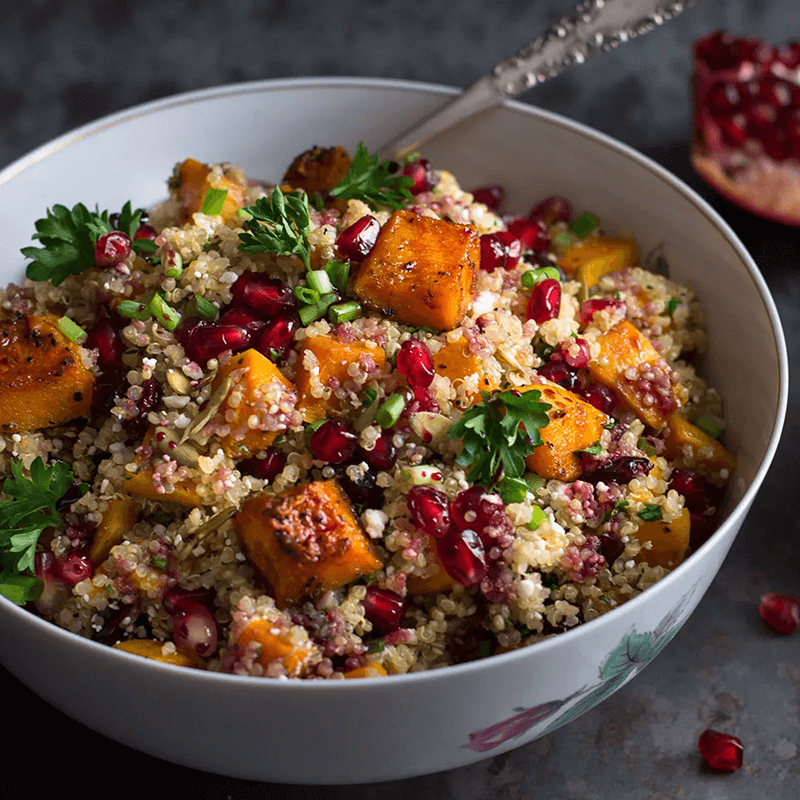
Roasted Butternut Squash Quinoa Salad
Instructions
- Preheat oven to 400 degrees. Take squash seeds from center of squash and sprinkle with salt and pepper. Coat with oil and roast until squash seeds are golden brown.
- Cut Apple, Squash and sweet potato into 1-inch cubes. Coat with coconut oil and sprinkle with chopped sage, salt and pepper. Roast for 20 mins. Until fork tender.
- In a skillet. Cook Quinoa to directions. Add cut up scallions.
- Add roasted vegetables and apple. Toss to combine. Dress with garlic lemon-mustard dressing. Add roasted squash seeds.
- Serve immediately. Enjoy!
Information
Ingredients
Main Ingredients
- 1/2 butternut squash
- 1 large sweet potato
- 1 packet of quinoa and kale
- 1 apple
- 4 pitted dates
- 1 spring onion
- 1 sage
- salt
- pepper
- Garlic Lemon-Mustard Dressing
- 2 roasted garlic cloves
- 1/2 cup olive oil
- 1/4 cup fresh lemon juice
- 1 Tablespoon Dijon mustard
- 1 teaspoon honey
- Kosher salt and freshly ground black pepper
Instructions
- Preheat oven to 400 degrees. Take squash seeds from center of squash and sprinkle with salt and pepper. Coat with oil and roast until squash seeds are golden brown.
- Cut Apple, Squash and sweet potato into 1-inch cubes. Coat with coconut oil and sprinkle with chopped sage, salt and pepper. Roast for 20 mins. Until fork tender.
- In a skillet. Cook Quinoa to directions. Add cut up scallions.
- Add roasted vegetables and apple. Toss to combine. Dress with garlic lemon-mustard dressing. Add roasted squash seeds.
- Serve immediately. Enjoy!
Notes
- Sweet potatoes are a rich source of fibre as well as containing a variety of vitamin and minerals including iron, calcium, selenium, and they’re a good source of most B Vitamins and Vitamin C.
- Quinoa is gluten-free, high in protein and one of the few plant foods that contain sufficient amounts of all nine essential amino acids. It is also high in fiber, magnesium, B Vitamins, iron, potassium, calcium, phosphorus, Vitamin E and antioxidants.
- Kale contains fibre, antioxidants, calcium, vitamin C and K, iron, and a wide range of other nutrients that can help prevent various health problems. Antioxidants help the body remove unwanted toxins that result from natural processes and environmental pressures.
Frequently Asked Questions
Are these recipes designed for everyday, practical cooking?
Yes. These recipes are specifically created to fit into a busy, real-world lifestyle. We focus on accessible, everyday ingredients you can find at any local grocery store, using standard kitchen equipment. The cooking methods are kept simple and straightforward, making them perfect for quick weeknight dinners or efficient weekend batch cooking and meal prep.
How do these recipes support sustained daily energy and focus?
Every recipe is structured around core clinical nutrition principles, prioritizing clean proteins, healthy fats, and complex, fiber-rich carbohydrates. By avoiding highly refined sugars and heavily processed ingredients, these meals provide a slow, controlled release of glucose into your bloodstream. This prevents the sharp insulin spikes and subsequent “sugar crashes” that cause afternoon fatigue and brain fog.
Are your recipes strictly aligned with Low-GI principles?
Absolutely. We place a massive emphasis on Low-GI (Glycemic Index) and blood sugar stability. As a dietician-led brand, our ingredient choices focus on high-fiber grains, lean proteins, and nutrient-dense vegetables that naturally lower the overall glycemic load of the meal. This makes our recipes exceptionally beneficial for maintaining long-term metabolic health and steady, reliable stamina.
Can I easily adapt these recipes for plant-based, vegan, or specific dietary needs?
Yes, flexibility is built directly into our culinary design. While many of our recipes are naturally plant-based or vegan-friendly, the ingredient lists are structured to allow for effortless substitutions. Whether you are cooking around food sensitivities, managing specific allergies, or adjusting for personal lifestyle preferences, you can easily swap proteins or grains without compromising the nutritional balance of the dish.
How do these meals support active training and physically demanding working routines?
To perform your best – whether you are training for an event, recovering from a workout, or navigating a physically grueling work day – your body requires optimal nutrient density. Our meals are designed to optimize tissue repair and glycogen replenishment. They supply the essential vitamins, clean amino acids, and minerals your body needs to recover quickly, reduce muscle soreness, and maintain lean tissue.
How can I combine these recipes with the Back To Basics Meal Replacement Shakes?
Our whole-food recipes are designed to complement your structured lifestyle plan seamlessly. A highly effective strategy for busy professionals or weight management goals is to substitute one or two on-the-go meals with our premium Low-GI Gold Range Supa Shakes, and then enjoy one of our beautifully balanced, whole-food recipes for your main sit-down meal. This gives you the perfect blend of absolute convenience and fresh culinary variety.
Can these recipes assist me with sustainable weight management?
Yes. Sustainable weight management relies on portion awareness, nutrient density, and satiety (feeling full). Because our recipes focus on high-protein and high-fiber ingredients, they keep you feeling satisfied for significantly longer, naturally curbing the urge to snack between meals. They offer a delicious, deprivation-free way to manage your nutritional boundaries long-term.